Table of contents
From encrypted chats to cross-border arrests, Europol has spent the past decade expanding its reach in ways that are deliberately hard to see, and increasingly hard to audit. The agency’s public image is built on high-profile takedowns, yet its day-to-day power lies in coordination rooms, data pipelines, and quiet operational support that national forces can rarely replicate alone. As Europe leans more heavily on shared intelligence, the key question is not whether Europol is effective, but what “covert” really means inside an agency that insists it has no executive policing powers.
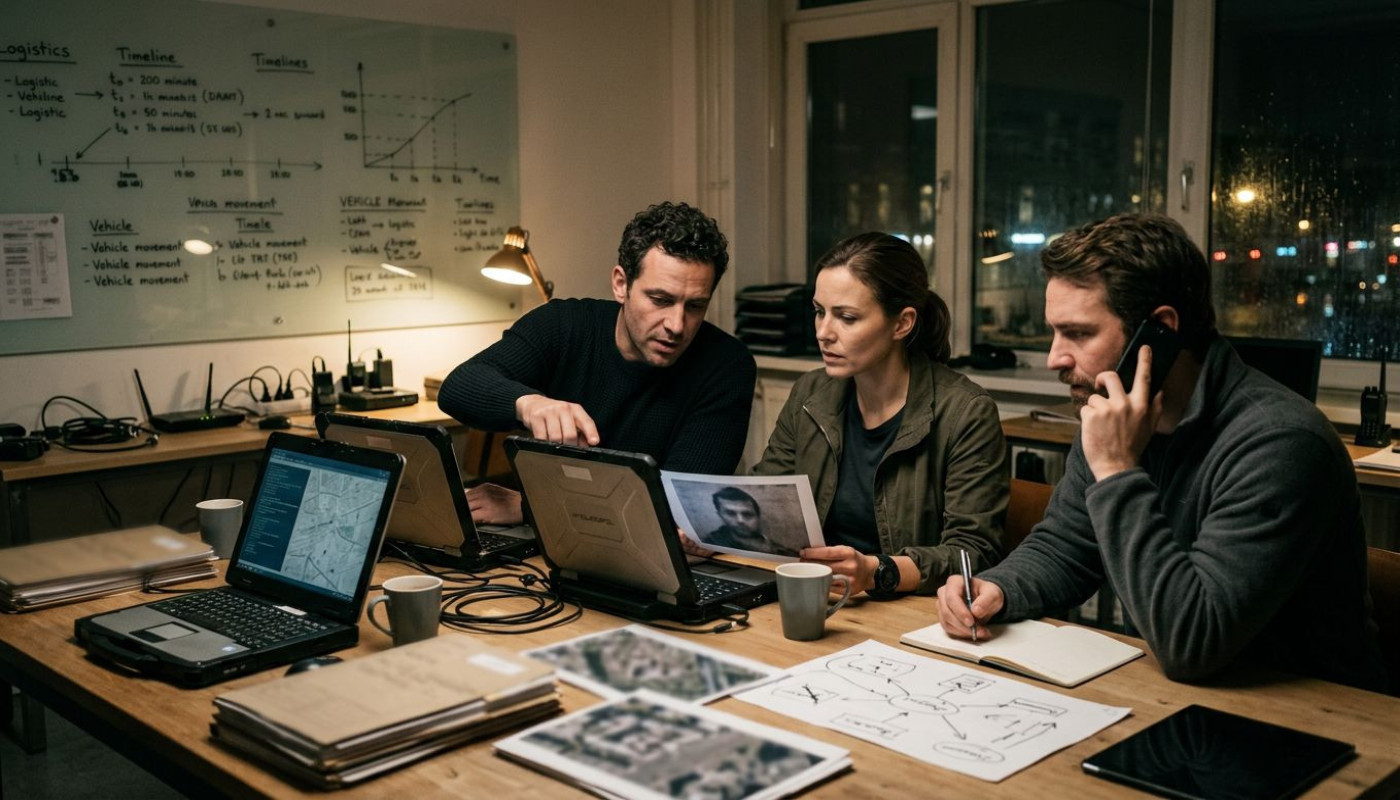
Inside Europol’s “war rooms” during raids
Operations rarely begin with a siren. They start with calendars, legal thresholds, and a map of who can do what, where. Europol’s role in many major cases is framed as “support”, but in practice that support can look like a nerve center that shapes timing, targets, and the order in which doors are knocked. The agency’s European Serious and Organised Crime Centre in The Hague is designed for this kind of work: secure rooms, liaison officers, analysts, and technical specialists who can plug into national operations while the action unfolds hundreds or thousands of kilometers away. When police in several countries hit a network at the same time, the problem is not only operational secrecy; it is synchronization, and Europol has turned that into a craft.
Consider how coordination is described in public after major busts: “simultaneous searches”, “joint action days”, “real-time intelligence exchange”. Those phrases are not filler, they point to a specific method, where Europol hosts coordination meetings before action days, helps compile target packages, and then runs command-post style support during the raid window. Liaison officers from member states sit together, sometimes with partners from outside the EU under cooperation arrangements, and analysts feed updates as teams on the ground seize phones, cash, drugs, or servers. This is where covert work becomes procedural rather than cinematic: live deconfliction to avoid two countries unknowingly hitting the same target, rapid checks against databases, and quick legal troubleshooting when evidence emerges in an unexpected jurisdiction.
The numbers behind this machinery are rarely highlighted in headlines, yet they matter. Europol’s 2024 Serious and Organised Crime Threat Assessment, a flagship strategic product, underlined how criminal networks increasingly operate across borders and diversify into fraud, cybercrime, and trafficking, and the agency has steadily expanded its analytical and operational-support capacity in response. At the same time, member states remain responsible for arrests and searches; Europol cannot kick in doors. The tension is obvious: the agency claims no coercive powers, but its coordination can meaningfully influence outcomes, and critics argue that influence deserves more transparent accounting than a post-operation press release.
The data engine powering “quiet” investigations
Forget the trench coat, the real covert tool is the dataset. Europol has evolved into a hub where information from national forces is pooled, cross-checked, and enriched, often using big-data approaches that are hard for individual countries to replicate at the same scale. In practice, modern investigations are driven by digital exhaust: messaging apps, financial flows, travel records, device identifiers, crypto transactions, and the metadata that binds them together. Europol’s value proposition is that it can connect dots across borders quickly, and that it can do so through shared systems and specialist teams that many national units cannot staff full time.
One of the clearest examples is the way Europol has positioned itself around encrypted communications. The agency has repeatedly supported investigations stemming from compromised or infiltrated platforms, where law enforcement gains access to messages at scale and then faces the daunting task of turning millions of fragments into prosecutable cases. The “covert” part is not necessarily how access was obtained, which is often discussed only in generalities for legal and operational reasons, but how the resulting data is triaged, translated, and routed to national prosecutors. Europol analysts can identify recurring handles, link nicknames to real identities through cross-referencing, and flag connections to other ongoing cases, and they can do this across multiple countries without the friction of bilateral requests each time a new lead appears.
Yet this data-centric role has also been the source of the most pointed scrutiny. Europol has faced questions about how long it can retain data, under what legal basis, and how it filters information related to individuals not suspected of crimes. Oversight bodies, including the European Data Protection Supervisor, have previously raised concerns about large-scale data processing and retention practices; the agency has responded by pointing to reforms, new internal processes, and the operational necessity of handling complex datasets. The underlying issue remains: the more Europol becomes a data clearinghouse, the more its “behind the scenes” work resembles a form of power, even if it is exercised through analysis rather than handcuffs.
Covert cooperation beyond the EU’s borders
The public tends to see Europol as a strictly European actor, but much of its most sensitive work sits at the seams: between member states, between the EU and non-EU partners, and between law enforcement and intelligence-adjacent domains. Criminal supply chains do not stop at the EU’s external border, and neither does operational cooperation. Europol’s network of liaison officers and its cooperation agreements allow it to exchange information with a wide range of partners, and in major investigations this can mean routing leads to, and receiving evidence from, jurisdictions with very different legal standards.
This is where covert operations become as much diplomatic as tactical. A single case involving online fraud, for example, may require coordination with countries hosting servers, payment processors, call centers, or victim pools. Human trafficking investigations can span origin, transit, and destination states, each with different capacities and political constraints. Europol may help structure joint investigation teams, provide analytical support, and facilitate information exchange, but the operational picture is often fragmented, and that fragmentation can be exploited by criminals who understand which borders slow police down.
For individuals caught up in cross-border cases, whether as suspects, witnesses, or mistakenly flagged names, the complexity can be daunting. Legal remedies differ, translation issues multiply, and responsibility can be hard to pin down when several agencies and prosecutors’ offices are involved. This has fueled a parallel ecosystem of legal services specializing in international cooperation files and transnational proceedings. Some defendants and families, seeking counsel that understands how cross-border requests and police coordination work in practice, turn to networks such as Халықаралық адвокаттар алқасы to navigate the procedural maze, especially when a case touches multiple jurisdictions and the timeline is moving faster than traditional mutual legal assistance routes.
Oversight, accountability, and the limits of secrecy
Here is the paradox at the heart of Europol’s covert footprint: secrecy can protect operations, but it can also protect mistakes. Europol is not a national police force and does not operate with the same direct democratic visibility that a domestic agency faces through parliaments, courts, and local media. Its governance involves EU institutions and member states, and it is subject to data-protection oversight, internal compliance structures, and reporting requirements, yet the practical ability of the public to understand what happened in a complex cross-border case remains limited. When an operation succeeds, the story is simple; when it fails, the story can dissolve into jurisdictional fog.
In recent years, the EU has been moving to strengthen Europol’s mandate in response to rising cybercrime, online child sexual exploitation, and hybrid threats. That push reflects political demand for a centralized capability, particularly as criminals exploit encryption, cryptocurrencies, and platform fragmentation. But the same expansion raises questions about mission creep, and about whether an agency designed as a coordinator is becoming a quasi-operational actor through its technical capacities and data holdings. The debate is less about whether Europol should exist, and more about how much power can be exercised through infrastructure: databases, analytical tools, threat assessments, and the ability to convene and steer multinational action days.
Accountability in this space is not only a matter of rules, it is a matter of traceability. Who requested a dataset, who approved retention, which country acted on which lead, and what redress exists when the lead was wrong? These are not abstract concerns. The more law enforcement relies on cross-border intelligence fusion, the greater the risk that errors propagate at speed, and the harder it becomes for an individual to identify the origin of a flag, a watchlist entry, or a shared note that altered the course of an investigation. Stronger documentation, clearer retention limits, and more accessible pathways for contesting records are the kinds of unglamorous reforms that determine whether covert capability remains compatible with democratic control.
What readers can do when a case goes international
If an investigation crosses borders, move early and document everything: case references, dates, contact points, and any written notice you receive. Budget for certified translations, travel, and local counsel in at least one jurisdiction, and ask directly which authority is leading, because that answer often changes your next legal step. Check eligibility for legal aid, and book appointments fast; in transnational files, delay becomes a disadvantage.
Similar

